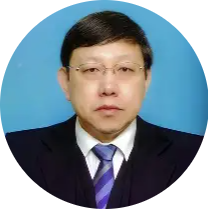
Keynote Speaker 1
Mingcong Deng, Professor, Tokyo University of Agriculture and Technology, Japan
Biography: Prof. Mingcong Deng (IEEE Fellow) received his PhD in Systems Science from Kumamoto University, Japan, in 1997. From 1997.04 to 2010.09, he was with Kumamoto University; University of Exeter, UK; NTT Communication Science Laboratories; Okayama University. From 2010.10, he has been with Tokyo University of Agriculture and Technology, Japan, as a professor. Now he is the Chair of Department of Electrical and Electronic Engineering. Prof. Deng specializes in three complementary areas: Operator based nonlinear fault detection and fault tolerant control design; System design on human factor based robot control; Learning based nonlinear control. Prof. Deng has over 650 publications including 220 journal papers in peer reviewed journals including IEEE Press and other top tier outlets. He serves as a chief editor for 2 international journals, and associate editors of 6 international journals. Prof. Deng is a co-chair of agricultural robotics and automation technical committee, IEEE Robotics and Automation Society; Also a chair of the environmental sensing, networking, and decision making technical committee, IEEE SMC Society. He was the recipient of 2014 & 2019 Meritorious Services Award of IEEE SMC Society, 2020 IEEE RAS Most Active Technical Committee Award (IEEE RAS Society) and 2024 IEEE Most Active SMC Technical Committee Award (IEEE SMC Society). He is a fellow of The Engineering Academy of Japan.
Abstract: Learning & operator theory based robust nonlinear control design for nonlinear systems with uncertainties is shown. The relationship between operator theory and passivity for adaptive control is discussed. Meanwhile, I will introduce support vector regression (SVR) utilized for regression analysis, where the design parameters of the SVR are selected by using particle swarm optimization (PSO). In order to realize sensorless control, PSO-SVR-based moving estimation with generalized Gaussian distribution (GGD) kernel is employed. That is, learning & operator based sensorless robust adaptive nonlinear control system can be obtained. Further, current results on modeling by ant colony optimization (ACO)-MSVR for 3D actuator are shown. Finally, some current results on actuator position control for 2D/3D micro hands are introduced.

Keynote Speaker 1
Z. Z. An, research associate and a Ph.D. candidate, Tokyo University of Agriculture and Technology, Tokyo, Japan
Biography: Z. Z. An (Student Member, IEEE) received the B.Sc. degree in robotic engineering from Qingdao University of Science and Technology, Qingdao, China, and the M.Sc. degree in Electrical Engineering and Computer Science from Tokyo University of Agriculture and Technology, Tokyo, Japan, where he is currently working as a research associate and a Ph.D. candidate. His current research interest includes stability analysis in operator based nonlinear control systems.

Keynote Speaker 2
Julie Stephany Berrío Pérez, Research Fellow at the Australian Centre for Robotics – ACFR (The University of Sydney, Australia)
Talk title: Intelligent transportation systems (ITS) at the Australian Centre for Robotics
Biography: Dr. Julie Stephany Berrío Pérez is a researcher at the Intelligent Transport Systems (ITS) group at the Australian Centre for Robotics (within the University of Sydney in Australia). Her work spans advanced sensing, AI-enabled mobility solutions, and road safety technologies. Her research interests include vulnerable road user detection, multimodal perception and mapping, and the integration of smart infrastructure with connected and automated vehicles. She has contributed to collaborative projects with transport authorities and industry partners, aiming to translate emerging technologies into practical, real-world mobility improvements.
Abstract: This presentation provides an overview of Intelligent Transportation Systems (ITS) research at the Australian Centre for Robotics (ACFR), highlighting advancements in connected vehicles, smart infrastructure, data-driven mobility solutions, and road-safety technologies. It showcases the group’s experimental platforms, including instrumented electric and urban vehicles, intelligent roadside units, VR tools, and large-scale datasets, and demonstrates their application in real-world studies.

Keynote Speaker 3
Mohammad Mahdee-uz Zaman, Vice-President of AWS Strategic Alliances & Go-to-Market at Cybage
Talk title: AI Frontiers 2030: Autonomous Intelligence and the Future of Industry, Research, and the Workforce
Biography: Mohammad Mahdee-uz Zaman (Mo) is a global technology executive, AI strategist, and advisor with over 30 years of experience leading digital transformation across startups, Fortune 500 companies, governments, and academia. As Vice President of AWS Strategic Alliances & Go-to-Market at Cybage, he drives global partnership strategy and AI-first modernization initiatives. He has held senior roles at Amazon, Dell, Verizon, and CenturyLink, and advised public sector leaders on Cloud and AI adoption. A recognized thought leader in education and innovation, Mr. Zaman has shaped digital skills programs at institutions including Daffodil International University, George Mason, St. John’s, Rutgers, NJIT, CodersTrust, and Washington University of Science and Technology. At Amazon, he was part of the Bar Raiser culture and led recruitment and innovation programs, including Startup Lofts. He also founded the NASA Space Apps Challenge in Bangladesh, speaks globally on AI and digital policy, and holds degrees from Baruch College (CUNY) and American Intercontinental University. Based in New Jersey, he continues to lead global technology strategy with a focus on inclusive innovation and impact.
Abstract: Artificial Intelligence is entering a new maturity cycle—one where intelligent autonomy, real-time decision systems, and human-machine collaboration are reshaping how industries operate, how universities teach, how researchers innovate, and how workers build their careers. This talk, “AI Frontiers 2030,” reframes AI not only as a technical breakthrough but as a strategic inflection point affecting national competitiveness, workforce capabilities, and the architecture of future industries.
The session will demonstrate how multimodal AI, autonomous robotics, and IoT-driven systems are evolving from task automation to cognitive autonomy—enabling machines that can perceive, reason, and act with minimal supervision. These advances are redefining sectors such as manufacturing, agriculture, healthcare, logistics, defense, smart cities, and critical infrastructure. At the same time, the emerging AI workforce is undergoing a structural shift. New roles are materializing—AI orchestrators, autonomy engineers, digital process integrators—while academic institutions must transition from knowledge-based teaching to competency-focused, project-driven learning ecosystems.
The talk outlines actionable pathways for industry leaders, academic institutions, researchers, and policymakers to harness intelligent autonomy responsibly. It highlights the implications for innovation, governance, and national skills development, emphasizing how countries like Bangladesh can use AI as a strategic accelerator to upgrade industries, develop future-ready talent, and position themselves competitively in the global technology landscape.